Both countries also committed to formalising cooperation on cybersecurity policy and information sharing on cybersecurity issues.

The Canadian government is seeking to revoke the citizenship of Tahawwur Rana Hussain, a Pakistan-born businessman accused of involvement in the 2008 Mumbai terror attacks, due to misrepresentation on his citizenship application.

India and Canada solidify their partnership with a landmark uranium supply agreement and discussions to finalise a comprehensive economic partnership, signaling stronger ties and cooperation on key global issues.
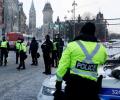
India has lodged a strong protest with Canada over the "threatening language" and "unacceptable imagery" targeting Indian leadership at a parade held in Toronto. The floats at the parade reportedly featured pro-Khalistan propaganda and imagery attacking Indian leaders, including Prime Minister Narendra Modi. India conveyed its concerns to the Canadian High Commission in New Delhi, calling on Canadian authorities to act against "anti-India elements" who are spreading hatred and advocating extremism and a separatist agenda. This incident comes days after Canadian Prime Minister Mark Carney's victory in the general election, which was seen as an opportunity to repair India-Canada ties that had been strained under Justin Trudeau's leadership. The two countries have been grappling with strained relations since Trudeau's allegations in September 2023 of the "potential" involvement of Indian agents in the killing of Hardeep Singh Nijjar on Canadian soil.
India on Thursday announced temporarily suspending issuance of visas to Canadian citizens in view of "security threats" faced by its high commission and consulates in Canada, amid an escalating diplomatic row over Ottawa's allegations relating to the killing of a Khalistani separatist on Canadian soil.

She said India was asked to waive diplomatic and consular immunity and cooperate in the investigation but refused.
Top Canadian officials have reportedly admitted to leaking details about India's interference to The Washington Post, but these specifics were not shared with Canadians, The Globe and Mail newspaper reported.
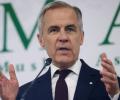
Despite ongoing tension between the two countries on the issue of extremism, Bezirgan said he expects warmer ties henceforth as Carney has invited Prime Minister Modi for the G7 Summit.

New Delhi's protest came a day after the Canadian parliament observed a "moment of silence" in the memory of Khalistan extremist Hardeep Singh Nijjar, who was gunned down in Surrey, British Columbia, in June last year.

Of the 26 requests sent to Canada for extraditing Khalistani terrorists, Ottawa has resolved only five and the rest remain in limbo, India's top envoy to that country has said, calling it the result of 'inaction'.

"What we have heard today only confirms what we have been saying consistently all along -- Canada has presented us no evidence whatsoever in support of the serious allegations that it has chosen to level against India and Indian diplomats," the MEA spokesperson said in the statement.
While there was no mention of India in the National Cyber Threat Assessment reports of 2018, 2020 and 2023-24, the 2025-26 assessment mentions India -- along with China, Russia, Iran and North Korea -- in the 'Cyber threat from state adversaries' section that introduces the state cyber threat ecosystem and discusses the cyber threats to Canada.

The escalation in the diplomatic row between India and Canada will not have an impact on the bilateral trade and investment ties between the two countries, government sources said on Tuesday. They also said that the bilateral trade value is not significant and Canadian funds can route their investments through Singapore, the UAE and the US. "India is a preferred investment destination," they said.
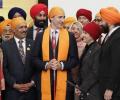
It said the actions not only impact India-Canada relations but also encourage a climate of violence and criminality in Canada to the detriment of its own citizens.
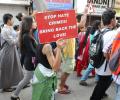
The perpetrators of these crimes have not been brought to justice so far in Canada, the MEA said.

A Canadian high commission spokesperson on Friday said the slashing of the size of the Indian staff was necessary given the reduction of Canadian staff in the country.
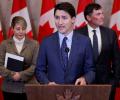
India first raised the presence of organised crime in Canada but the issue was ignored because of a permissive atmosphere for a long time, External Affairs Minister S Jaishankar said on Saturday, rejecting the targeting of its high commissioner and diplomats by the Trudeau government.
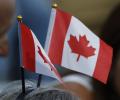
Tensions flared between India and Canada in September following Prime Minister Justin Trudeau's allegations of the "potential" involvement of Indian agents in the killing of Khalistani extremist Hardeep Singh Nijjar on June 18 in British Columbia. India had designated Nijjar as a terrorist in 2020.
Last week, Canadian authorities charged three Indian nationals with the murder of Nijjar. It is reported that they entered Canada on student visas.
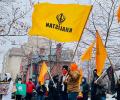
India also accused Canada of allowing "celebration and glorification" of violence, expressing concerns over the security of Indian diplomats in that country, and said it expects Ottawa to ensure that they are able to carry out their responsibilities without fear.

The development comes days after External Affairs Minister S Jaishankar said on Sunday that India is looking at resuming visa services for Canadians "very soon" if it sees progress in the safety of its diplomats in Canada.
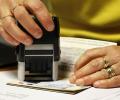
Data reveals that India issued only 5,709 tourist visas during this year's January 1 to November 2 period, reflecting a staggering 91 per cent decrease compared to the entire year of 2022.
The 'deliberate attack' on a Hindu temple in Canada sparked strong condemnation in India on Monday, with Prime Minister Narendra Modi asking the Canadian government to ensure justice and uphold the rule of law.
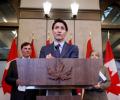
"When it comes to the Canadian matter, we have made clear that the allegations are extremely serious and they need to be taken seriously. We wanted to see the government of India cooperate with Canada in its investigation. Obviously, they have not chosen that path," State Department spokesperson Matthew Miller told reporters at his daily news conference.

'Are we to believe that coordinated moves by the Canadian and US authorities are no longer taking place?', asks Ambassador M K Bhadrakumar.
India's High Commissioner to Canada, Sanjay Kumar Verma reiterated New Delhi's stand on the diplomatic standoff with Canada, and urged Ottawa to release evidence backing up its allegation regarding the killing of Khalistani terrorist Hardeep Singh Nijjar.
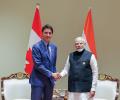
Neither India nor Canada reacted to the report that came 12 days after New Delhi asked Ottawa to downsize its diplomatic presence in India.

India on Monday expelled six Canadian diplomats and announced withdrawing its high commissioner and other 'targeted' officials from Canada after strongly dismissing Ottawa's allegations linking the envoy to a probe into the killing of Sikh extremist Hardeep Singh Nijjar, in a major downturn in already frosty ties between the two nations.
A day after Trudeau's remarks, ministry of external affairs spokesperson Arindam Bagchi asserted that India's "core issue" with Canada remains that of the space given to separatists, terrorists and anti-India elements in that country.

India has strongly rejected as "baseless" allegations of its interference in Canadian elections and asserted that the core issue has been Ottawa's meddling in New Delhi's internal affairs.

The US also remains in regular contact with the Canadian government, White House press secretary Karine Jean-Pierre said on Friday.

India and Canada have mutually beneficial political and economic linkages. The two countries should get together and find a solution. The expulsion war should, in the meantime, be a guarantee against any deterioration of the situation, asserts Ambassador T P Sreenivasan, the first Indian head of mission to be ever expelled by any country.

Joly said that Ottawa stands by its decision to inform Canadians about the allegations surrounding the killing of Nijjar, but remains engaged with the Indian government on the issue.

Because India was asked to cooperate and if you look at the typical criminal terminology, when someone asks to cooperate, it means you have already been convicted and you better cooperate
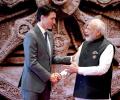
The United States has urged India to cooperate with Canada in its investigations.
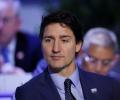
The ties between India and Canada came under severe strain following Trudeau's allegations on September 18 of a 'potential' involvement of Indian agents in the killing of Khalistani separatist Hardeep Singh Nijjar on June 18 in British Columbia.

Admitting for the first time, a top United States diplomat has confirmed that there was 'shared intelligence among Five Eyes partners' that had prompted Canadian Prime Minister Justin Trudeau's offensive allegation about Indian agents' involvement in the killing of a Khalistani extremist on Canadian soil, according to a media report on Saturday.
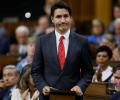
The US on Wednesday favoured a thorough investigation into killing of a Khalistani separatist in Canada in June, two days after Canadian Prime Minister Justin Trudeau's allegations of a "potential" involvement of Indian government agents in the case kicked up a major diplomatic row between New Delhi and Ottawa.

"If you have a reason to make such an allegation please share the evidence because we are not ruling out an investigation," Jaishankar, who is on a five-day official visit to the United Kingdom, said while responding to a question.

The external affairs minister also said that India is likely to resume issuance of visas to Canadians if it sees progress in the safety of Indian diplomats in Canada.
 © 2026 Rediff.com - Advertise with us - Disclaimer - Privacy Policy - Sitemap - Feedback - About us - Terms of use - Grievances